
Queening Out: A Queen Returns
A semi-professional opera queen returns from retirement

I asked a friend who shall be known henceforth as “Leopoldine” (for reasons that are well-known to them and may one day be obvious to you):
“If I were to write about opera again, what should I write?”
And Leopoldine replied: “The weirder the better. Let yourself queen out about Un di ero piccina.”
For those of you who have not yet been initiated, I’ll do my best to explain, but do try to keep up: “Un di ero piccina” (One day, when I was young) is an aria from Pietro Mascgani’s opera Iris, which is like a lesser-known Madama Butterfly with more explicit sex work. It’s also known as The Octopus Aria, because it is basically Japanese tentacle porn, or at least inspired by it. The final phrase “Quella piovra è la morte!” means “That Octopus is Death.” Death as in la petite mort. Death as in “orgasm.”)

I love Iris. I love the Octopus aria. I even have the octopus t-shirt to prove it. (And the octopus rings, brooches, necklaces, glazed fruit bowl, and the shower curtain too.) So yeah, I queen out over “Un di ero piccina.”
And “queening out” is the reason I’m here.
To queen out, you must first be a queen. What’s a queen? That’s another essay (stay tuned), but just to get some of you up to speed as quickly as possible (please try to come prepared next time!), I’ll borrow a pithy definition from Jim Cory:
“Gay man + his obsession = queen.”
Though “[obsession] queen” is typically a term applied to gay men, I’ll insist that it can be applied to all queer identities and genders. Even some straight people can be queens! But I must also insist that the obsession be well beyond the mainstream. It must be niche and your knowledge of it must be frighteningly comprehensive.
To be a queen, your obsession must be something you would have hidden from the popular kids in high school. Something you wouldn’t bring up at happy hour with coworkers, because it would take too long to explain and a layman’s overview couldn’t possibly do it justice. Something that, once you learned of its existence, you became suddenly possessed by an unquenchable thirst to learn everything about. Darling, you had never realized just how parched you had been all these years! Whatever it is—opera, musical theater, old Hollywood, needlepoint—it must consume an unreasonable and unhealthy amount of your brain power and time. It must be something you swath yourself in every day without thinking. Like air, you need it to survive the drudgery and the workaday.
To be a queen is anti-social and hyper-social behavior all at once. You can’t discuss it with just anyone at the depth and with the granularity with which you have to discuss it. At the same time, it’s a hyper-social behavior: once you find your fellow queens, the bond you form over your shared obsession is life-sustaining. Let the queening out commence.
Queening out is the controlled mania with which you engage with your obsession:
On your own: On the subway, AirPods in, listening to a playlist of 15 different versions of Maria Callas singing “Ah bello a me ritorna” from Bellini’s Norma on shuffle so you can test yourself on the year she sang each performance.
With your other queens. In the group chat, discussing a recording of Raina Kabaivanska singing an aria from Gluck’s Armide that has finally made its way to the internet. You all own it on CD.
On the internet. The listservs of the early 2000s, learning how to listen to opera from amateur proto-podcasts who once haunted the old Metropolitan Opera and played recordings (often live, very often recorded illegally) from opera’s Golden Age with commentary that was as informative as it was manic, the arrival of YouTube and videos with titles like “Astrid Varnay’s Demonic Ortrud Cries in Despair” and 11 Sopranos Hits High F in ‘’Ah non giunge’‘.
One day, I’ll tell you all about my journey to become an opera queen…and how you can become one too! But this is a soupcon and we have got to move on. Just know that I’m an opera queen, which means I love to queen out about opera, but most of it has been regulated to my own obsessive listening habits, harassing the group chat, or trying to explain to my husband why the 1952 Callas La gioconda is superior to the later studio recording even though the sound is worse.
Ritorna Regina: The Queen Returns
I asked Leopoldine, “If I were to write about opera again, what should I write?”
I stopped writing about opera on or around August 15, 2023, when the magazine I’d written for, Opera News, was discontinued after 87 years. At the time (and still!) Opera News was the only widely circulated monthly magazine in North America dedicated to opera and, really importantly, emphasized American opera. Like almost every other contributor to the magazine, I learned of the magazine’s demise while scrolling the socials. An official email from the editor-in-chief came shortly after: the last issue of Opera News would be published in November. In December, it would debut in its new form as “part” of the European magazine Opera…as a glorified column. (Yeah, I said it, and I mean it, because it’s true!)
I’d been a frequent contributor to Opera News for a little over a decade. At first, I mostly reviewed live performances in New York City, then I started reviewing recordings. After about four years, I started writing features and wrote regularly for the magazine up until that final issue.
The day I learned that Opera News was over, I was working on two articles for the December issue—the lost issue! I had just finished one of them, a feature about Daniel Catàn’s Florencia en el Amazonas timed to coincide with the Met’s production that fall. The other was a dream come true for the 16-year-old opera queen still lurking within me: I’d been assigned to review “La Divina: Maria Callas in All Her Roles,” a boxset containing studio and live recordings of Callas in 74 roles. The set also included her masterclasses at Juilliard, recital albums, DVDs of video performances, unreleased rehearsal sessions and…”an NFT with digital content”. (Does anyone know what I’m supposed to do with this?)
With the exception of the unreleased rehearsal sessions (which are illuminating!!!), I had heard or seen everything in the boxset at least three times over my long life as a dual Opera Queen and Callas Queen (a debilitating condition). But listening to them again over such a concentrated period of time reintroduced me to a part of myself that had been fading away.
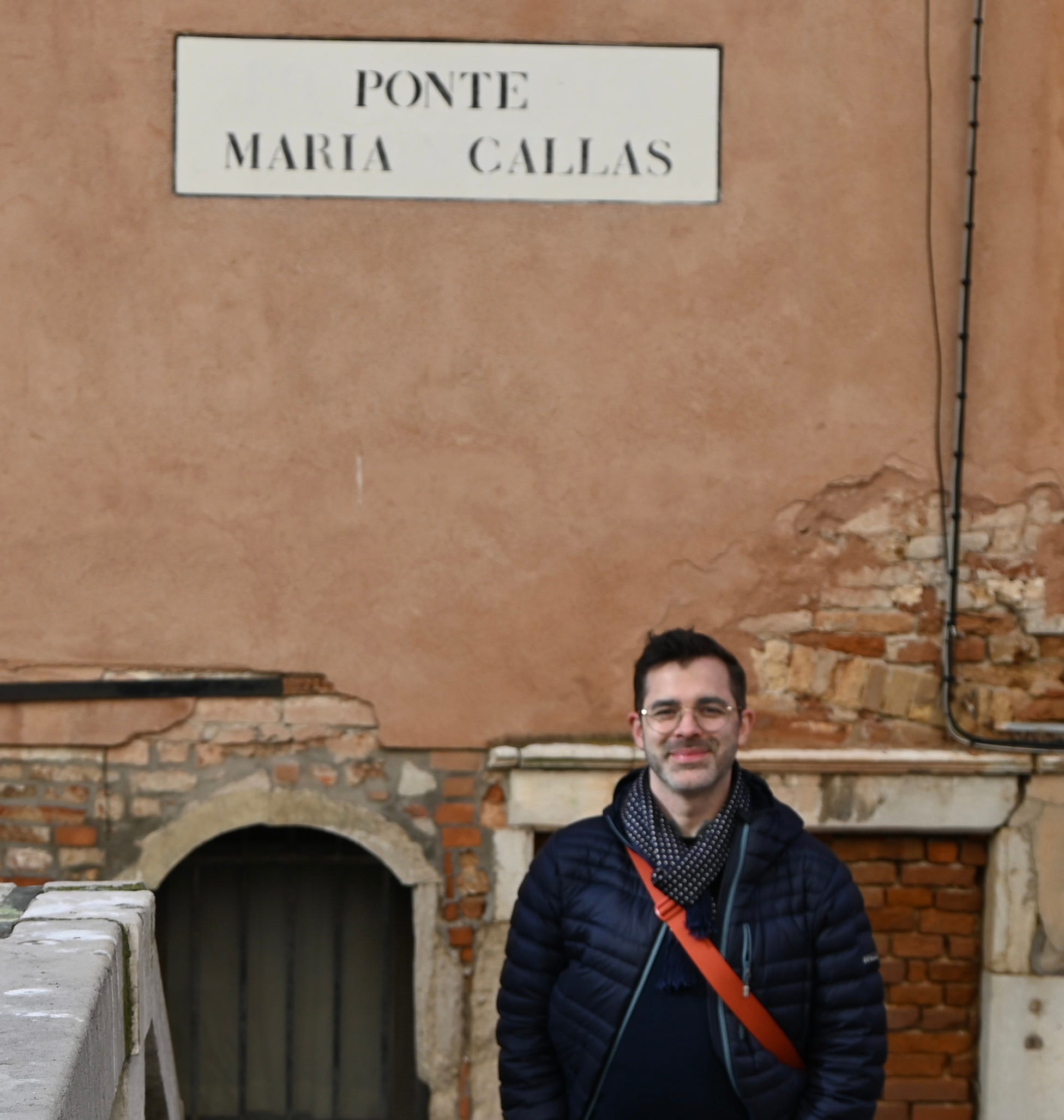
An Opera Queen Never Really Retires
Shortly before the pandemic began in 2020, I semi-retired from my decade-long career as a professional opera queen and enlisted in the ranks of Those Who Have Health Insurance. In other words, I went from being a full-time-ish freelance writer and accepted full-time employment as a technical writer in the IT department of a financial services firm. Yes, the rumors are true: I desperately needed reliable health insurance and at least a shadow of financial stability. But truthfully, I had also become disillusioned with the opera and classic music industry and was bored by the work I had to do to pay the bills, with the exception of the writing I did for Opera News, Opera America magazine, and writing supertitles.
My obsession had become my obligation. I stopped wanting to go to the opera, even after performances resumed post-pandemic. I went from attending performances at the Met or elsewhere in the city at least once a week, to barely five times a year. My crown started to slip. I referred to myself as a “recovering opera queen.”
Listening to the recordings in the Callas boxset helped me reconnect with the deepest layers of my opera queenery that I hadn’t visited in years. But just as I was getting ready to re-emerge from my cocoon and queen out with renewed ferocity in the December 2023 issue of Opera News…in 1000 words or less, my primary writing outlet disappeared.
I could’ve sought out other publications, but I didn’t want to write reviews or fluff pieces about half-assed productions, interview people whose work I didn’t appreciate, or regurgitate the same “Opera is for everybody! Wear your jeans to Götterdämmerung!” pseudo-populist foolery that encourages people to bring their bodies and wallets to the opera but doesn’t show them how to engage with the art form, its history, its artists in any meaningful way that would compel them to return over and over.
I wanted to queen out about Un di ero piccina and have some goddam fun again.
Bis: She’s Back
For over two years, I stopped writing about opera, but I kept listening and queening out, alone, in the group chat with Leopoldine, and slowly, I started returning to the opera more regularly. (Did you think I had ever stopped completely? Grow up.)
And now, I’m ready to write again, but this time on my own terms. I’ll use this space to get a little weird, a little queer, if you will, and pretty gay about opera. There will be:
Queening Out: weekly musings and lessons on how to be an opera queen according to me, SJT,
The Opera Queen Chronicles: occasional reviews of operas in NYC and the environs thereof, but not like review reviews, fun reviews,
Interviews With an Opera Queen: sporadic (for now) interviews with self-proclaimed opera queens,
Compilations!!!: playlists, reading lists, and compilations of whatever opera foolery I’m hyper-fixating upon at the moment…with commentary (duh).
Feel free to join the journey, opera princesses!